What makes you more likely to have DRA?


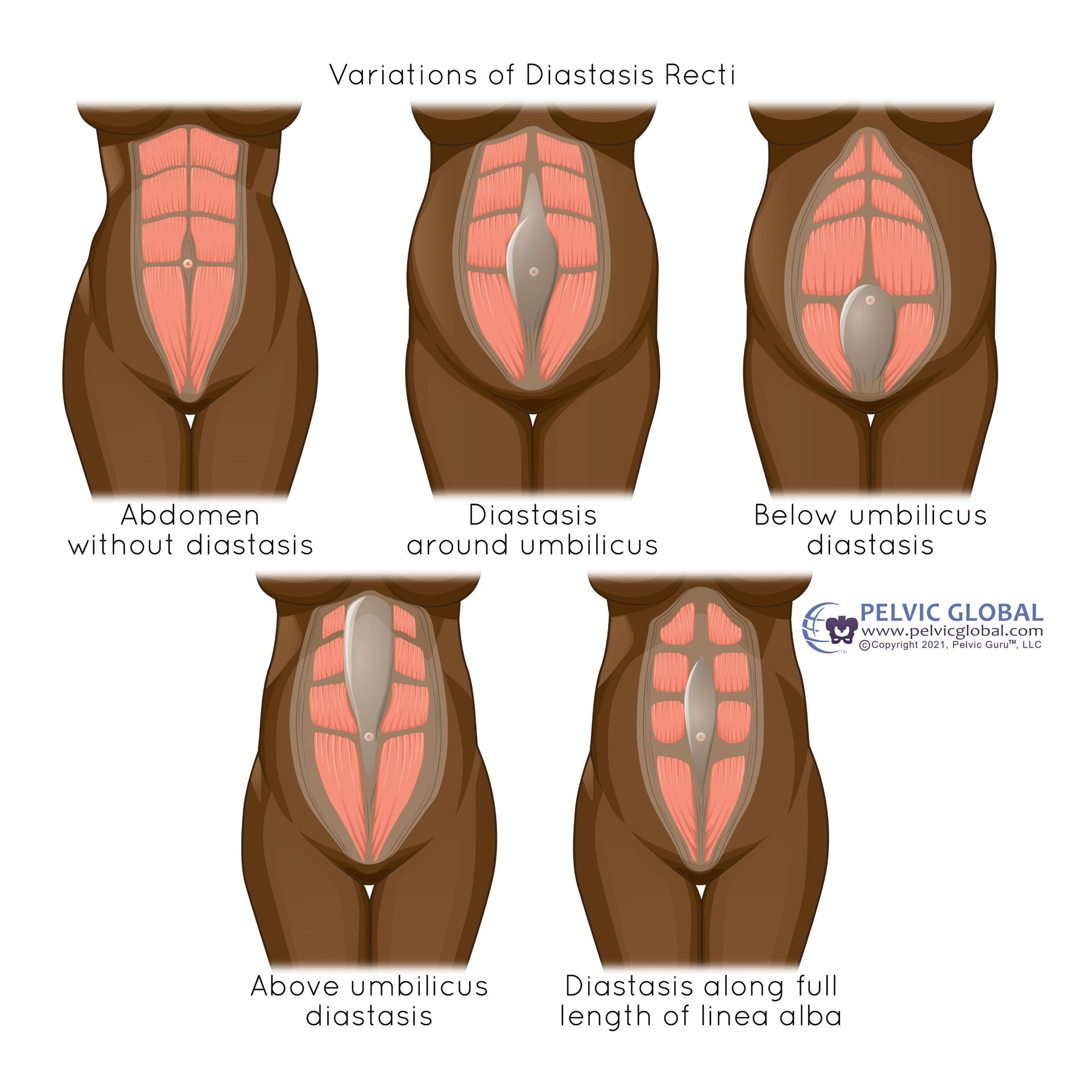
Here’s the good news: there has been a LOT of new research on diastasis rectus abdominis (DRA) within the last few years.  The bad news is that the studies are all so different from one another, and many can’t even agree on what the cut-off is to diagnose DRA, or how even to measure it in the first place!  This makes it incredibly hard to generalize results, as you can imagine!  But, some trends are emerging, including data on risk factors for developing DRA.


What are the most common risk factors for DRA?


Here's a short-ish list:

  • Pregnancy, and especially more than one pregnancy (this is a big one that shows up consistently across the board)


  • C-sections, especially more than one


  • Diabetes


  • Larger babies, >9lbs


  • Excessive amniotic fluid


  • Age (interestingly, most studies show a HIGHER incidence of DRA with increasing age, while others show LOWER)


  • And of course, everyone's love-to-hate: BMI.  This really relates not to BMI generally, but to the theory that carrying increased weight in your midsection will put more pressure against the abdominal wall.  I might consider buying into this once I see 1) research that specifically correlates higher waist circumference with DRA, and 2) that decreasing waist circumference actually helps improve DRA.  So far we don't have evidence for either of those things.


Childcare responsibilities and repeated heavy lifting may also play a role, but the jury is still out on those two.


If I have a lot of these risk factors, will my DRA never heal?


Absolutely not!  And let’s be clear: everyone who is pregnant will develop a DRA by week 35 of pregnancy.  Everyone.  The key here really is how long it takes your body to recover from that DR after the baby is out of your belly. 


I am hopeful that this knowledge may help some people who are struggling with DRA and have these risk factors realize that it's not their fault!  And, may eventually lead us to figure out why some people struggle with DRA for so long after birth, while others do not.


References (most are open access!):

Cavalli, M., Aiolfi, A., Bruni, P. G., Manfredini, L., Lombardo, F., Bonfanti, M. T., Bona, D., & Campanelli, G. (2021). Prevalence and risk factors for diastasis recti abdominis: a review and proposal of a new anatomical variation. Hernia : the journal of hernias and abdominal wall surgery, 25(4), 883–890. https://doi.org/10.1007/s10029-021-02468-8


Iqbal, M., Hussain, T., Khalid, F., Ali, M., Ashraf, I., & Nazir, T. (2020). DIASTASIS RECTI ABDOMINIS AND ITS ASSOCIATED RISK FACTORS IN POSTPARTUM WOMEN. PAFMJ, 70(5), 1535-38. Retrieved from https://pafmj.org/index.php/PAFMJ/article/view/5600 


Kaufmann, R. L., Reiner, C. S., Dietz, U. A., Clavien, P. A., Vonlanthen, R., & Käser, S. A. (2022). Normal width of the linea alba, prevalence, and risk factors for diastasis recti abdominis in adults, a cross-sectional study. Hernia : the journal of hernias and abdominal wall surgery, 26(2), 609–618. https://doi.org/10.1007/s10029-021-02493-7


Sperstad, J. B., Tennfjord, M. K., Hilde, G., Ellström-Engh, M., & Bø, K. (2016). Diastasis recti abdominis during pregnancy and 12 months after childbirth: prevalence, risk factors and report of lumbopelvic pain. British journal of sports medicine, 50(17), 1092–1096. https://doi.org/10.1136/bjsports-2016-096065 


Wu, L., Gu, Y., Gu, Y., Wang, Y., Lu, X., Zhu, C., Lu, Z., & Xu, H. (2021). Diastasis recti abdominis in adult women based on abdominal computed tomography imaging: Prevalence, risk factors and its impact on life. Journal of clinical nursing, 30(3-4), 518–527. https://doi.org/10.1111/jocn.15568 


By Stephanie Dillon • September 23, 2026
Constipation During Pregnancy and Postpartum
By Stephanie Dillon • September 16, 2026
Treatment of Functional Constipation
By Stephanie Dillon • September 10, 2026
Functional Constipation: Types and Diagnosis 
By Stephanie Dillon • September 1, 2026
Constipation
By Stephanie Dillon • March 31, 2026
Surgery for Diastasis Rectus Abdominis
By Stephanie Dillon • March 31, 2026
What if exercise alone isn't enough to heal DRA?
signs you need pelvic floor therapy
By Stephanie Dillon • March 26, 2026
What are the best exercises for postpartum diastasis rectus abdominis (DRA)?
By Stephanie Dillon • March 26, 2026
What is Diastasis Rectus Abdominis? Aka DR/DRA/Di-recti?
By Stephanie Dillon • January 20, 2025
Prolapse Surgeries, Part II This article is a follow-up to a Part 1 article I wrote on prolapse surgeries, where I covered a lot of FAQs about who needs surgery and why. In this article, we'll cover the nitty gritty of surgeries, including the different types of surgeries and recovery times, etc. We won't rehash what I mentioned last time, so if you have questions about who might need surgery, and how successful surgery generally is or isn't, please revisit the past article! What types of prolapse surgeries are there? There are two types of surgeries. For most people who are patients at Pelvic Love and who are reading this article, they will have a type of surgery that preserves the ability to have vaginal intercourse. There is another type of surgery that closes off the vagina, but then of course after that, you are no longer able to have intercourse. So that is typically reserved for elderly people with vaginas, as this type of surgery has the highest cure rate for prolapse. But of the types of surgeries that leave the vaginal canal open, there are many options depending upon the type of prolapse. Does surgery vary based on the type of prolapse? Yes! For bladder prolapse, the most common type of surgery is called anterior colporrhaphy . In this procedure, the front wall of the vagina underneath the bladder has sutures placed in it to help reinforce the original position of the bladder. For rectocele (rectal prolapse into the vagina), the most common type of surgery is a posterior colporrhaphy . This also involves placing sutures on the backside of the vaginal wall to help keep the rectum in place. Sometimes this is also done in combination with a repair of the perineal body (the area between the vagina and anus), aka perineorrhaphy. What about uterine/cervical prolapse? This gets a little tricky. Many times, if you are done having children and your prolapse is more advanced, you may be advised to have a hysterectomy . However, there are other options that will allow you to keep your uterus. These surgeries are a little more complicated to explain, but if you click this link , you'll find them explained well. Basically they all involve some method of re-suspending the uterus and the cervix by using either stitches or mesh (NOT the mesh that is involved in so many lawsuits!). If you do opt to have a hysterectomy, then as you may imagine, this can place you at a higher risk of bladder and/or bowel prolapsing (if they have not already done so). The uterus takes up a fair amount of space inside the pelvis, so if you remove it, that leaves empty space for other organs to fall into. If I do have a hysterectomy, what are my options to avoid future issues with prolapse? This is the one topic for which I will drag out my soapbox. If you do have a hysterectomy, and it is an option for you, I would HIGHLY recommend your surgeon re-suspends the vaginal vault as part of your surgery . The vaginal vault is the apex of the vagina, and where the vagina is sewn shut after the uterus/cervix is removed. Many surgeons will just stop here and allow the top of the vagina to essentially scar in place. However, as you can imagine, when you remove a major internal organ, then you are also removing (or slackening) a lot of ligaments & fascia that support that organ and others! So this places the top of the vagina at a much higher risk from prolapsing in the future, and/or the bladder and bowel falling into the vagina. Please note, these "extra" steps to support the top of the vagina during a hysterectomy are not available to everyone . They do require more time under anesthesia, potentially greater skill from your surgeon, and the structures the vaginal vault is being sutured to are still intact. For example, I had a friend that had severe endometriosis and had a hysterectomy at 40 years old as a result. Her endometriosis was so advanced, and so many lesions had to be removed from inside the pelvis, that this didn't leave her surgeon with an option for a good place to suspend her vaginal vault. So even though I would recommend you discuss this with your surgeon, it's not an option for everyone. What are the options for suspending the vaginal vault after hysterectomy? There are many places from which the vaginal vault can be suspended after the uterus/cervix are removed. There are too many to go into detail in this format, but all have their pluses and minuses. The main options are the uterosacral ligament , sacrospinous ligament , and the sacrum itself . More general information can be found in this handout . What is recovery like after these types of surgeries? Every surgeon is different, but here are some general guidelines for recovering from a hysterectomy or prolapse repair. And YES, many times there is more than one repair being done at a time! Or a hysterectomy may be combined with an anterior and/or posterior vaginal wall repair, for example. Most often, you will have a catheter in place for anywhere from 8-24 hours after surgery (potentially longer for a bladder repair). And generally, your hospital stay is very short. Typically you need to take anywhere from 2-6 weeks off work. Around 2-3 weeks you can resume driving and taking short walks. And no sex (vaginal penetration) is allowed for 6 weeks. It's also important to remember that because these are very delicate tissues, they are not fully healed for THREE MONTHS. So, for quite some time you will likely have restrictions on heavy lifting. Have even more questions about your pelvic floor in general, or prolapse specifically? Here are two great websites for more info on all kinds of pelvic floor-related issues, not just prolapse: International Urogynecological Association handouts American Urogynecologic Society fact sheets References: All information contained in this post is aggregated from the handouts linked throughout the text.
By Stephanie Dillon • January 20, 2025
Prolapse Surgeries, Part I Whew, surgery for prolapse is a big topic. So much so that I'm splitting it into two articles to avoid overloading your eyeballs and brains! Today we'll spend time discussing the whys and who's surrounding surgery. Then next time we'll get into the details of types of surgeries, recovery times, etc. If I have prolapse, do I definitely need surgery? In a word, no. Or at least, most likely not. I wanted to get this question out of the way first, because I think prolapse can be a very scary diagnosis when you are first told you have it. Then, your brain (or at least mine!) jumps to the most extreme outcome, which would be surgery. As we discussed in a past article about the best exercises for prolapse, pelvic floor muscle training and core strengthening can be a really effective treatment for prolapse. It can relieve your symptoms, delay/prevent the need for surgery, and potentially even reduce the grade of your prolapse. Plus, pessaries are another great non-surgical option that can prevent or delay the need for surgery too (if the idea of a pessary is new to you, check out my past article on pessaries). So, especially if you are newly diagnosed with prolapse, don't jump to the thought that you will have to have surgery someday! Who does need surgery for prolapse? Indications for prolapse surgery are the following: Significant "bother" of symptoms (vaginal heaviness/pressure, associated bowel/bladder symptoms, difficulty/pain with intercourse, etc) "Failed" a good trial of conservative treatment - PT/pelvic floor muscle training, pessaries, etc. that does not satisfactorily resolve symptoms Completed childbearing Typically more-advanced prolapse grades (3-4), unless with lesser grades the symptoms are severe and not responding to conservative treatment If your prolapse is mild (grade 1-2), you are going to have more children, or have other medical conditions that would make surgery difficult, then you can/should avoid it! Typically the biggest differentiator regarding the need for surgery is if the prolapse extends beyond the hymen, or external to the vagina. Conservative treatment is less likely to be successful (but not always, of course!) in cases where the prolapse is external to the vaginal opening. More often than not, surgery will eventually be needed to resolve symptoms. But, that doesn’t mean a good trial of conservative treatment isn’t a good idea! How common is prolapse surgery? It is pretty common, at least with age. If you have a uterus/vagina, you have a lifetime risk of 11-20% of undergoing surgery for prolapse or stress incontinence. By age 80 the risk is 20%. How successful is prolapse surgery? It is very successful, especially in the short term! Success rates are generally around 80-90%, especially within the first 2 years following surgery. However, it is true generally that the further away you get from surgery, the more likely your prolapse may return. And we don't have a lot of high-quality studies that follow people after prolapse surgeries beyond 2 years (many stop around 6-12 months). The other caveat here is how we define "success." There is a BIG difference between restoring your anatomy (i.e., reducing the organ back to its original position, and having it stay there) and improving your symptoms. Around 5 years post-op, the majority of repairs will have "failed" in terms of anatomy. Meaning that if someone did a vaginal examination, the prolapse will have returned (although potentially not to the same degree that it was present before). However, even in these cases, the symptoms are still reported to be much better, and happiness with surgery outcomes is still high. So this is further proof that the degree of prolapse isn’t always equal to the severity of symptoms and that more research is definitely needed. Why do prolapse surgeries fail? There are a lot of reasons. The biggest one is that the tissues surgeons are trying to repair are very delicate. There's a really fine line between suspending an organ via it's own ligaments, or using mesh, with just enough tension vs. using too much tension. So it's always a balance between fixing the original problem without causing further complications. The other is that many times, the original cause of the prolapse has not been corrected. As I discussed at length in my intra-abdominal pressure article, prolapse really is a top-down problem more than a bottom-up problem. In fact, one recent study that looked at outcomes 5 years after prolapse surgery found no difference between those who did and did not do post-operative pelvic floor muscle training (Jelovsek 2018). Essentially, pelvic floor muscle training did not stop the prolapse from returning. So if you still are doing a lot of heavy lifting, have continued constipation, or are just genetically predisposed to having prolapse, there is a high likelihood it will return because there is still a lot of top-down pressure on your internal organs. It's important to note though, as I stated above, generally, your symptoms still remain improved even if the prolapse itself returns post-operatively. Although of course, some people will need to have a second surgery. This is also why it's best to delay surgery for as long as possible. Should I have prolapse surgery? This is obviously a very personal decision, and depends upon a lot of factors! I think the biggest takeaways here are that you should try PT, pelvic floor & core exercises, and/or pessaries first. Pelvic Love also fits in well with these exercise recommendations, and has some specific videos for prolapse! All of these things are recommended to be the first-line interventions for prolapse and can help the majority of people who are living with prolapse. If that doesn't work for you, or for whatever reason your surgeon determines surgery is the best route right away, then definitely consider it.  It can be very successful, especially for symptom improvement! As with any surgery though, I would always recommend getting at least 2 opinions before deciding to move forward. And I would highly recommend at least one of those opinions come from a urogynecologist or colorectal surgeon depending upon your needs. The next article will discuss different options for prolapse surgeries, so be sure to check that one out! References: Bureau, M., & Carlson, K. V. (2017). Pelvic organ prolapse: A primer for urologists. Canadian Urological Association journal = Journal de l'Association des urologues du Canada , 11 (6Suppl2), S125–S130. https://doi.org/10.5489/cuaj.4634 Dumoulin, C., Hunter, K. F., Moore, K., Bradley, C. S., Burgio, K. L., Hagen, S., Imamura, M., Thakar, R., Williams, K., & Chambers, T. (2016). Conservative management for female urinary incontinence and pelvic organ prolapse review 2013: Summary of the 5th International Consultation on Incontinence. Neurourology and urodynamics , 35 (1), 15–20. https://doi.org/10.1002/nau.22677 Jelovsek, J. E., Barber, M. D., Brubaker, L., Norton, P., Gantz, M., Richter, H. E., Weidner, A., Menefee, S., Schaffer, J., Pugh, N., Meikle, S., & NICHD Pelvic Floor Disorders Network (2018). Effect of Uterosacral Ligament Suspension vs Sacrospinous Ligament Fixation With or Without Perioperative Behavioral Therapy for Pelvic Organ Vaginal Prolapse on Surgical Outcomes and Prolapse Symptoms at 5 Years in the OPTIMAL Randomized Clinical Trial. JAMA , 319 (15), 1554–1565. https://doi.org/10.1001/jama.2018.2827 Weintraub, A. Y., Glinter, H., & Marcus-Braun, N. (2020). Narrative review of the epidemiology, diagnosis and pathophysiology of pelvic organ prolapse. International braz j urol : official journal of the Brazilian Society of Urology , 46 (1), 5–14. https://doi.org/10.1590/S1677-5538.IBJU.2018.0581